 Zheng
Zheng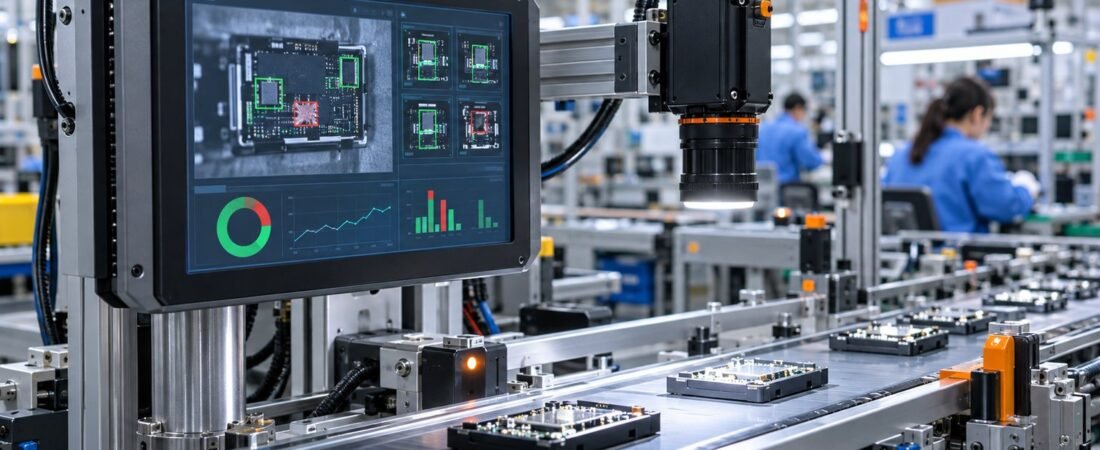
Many inspection and monitoring tasks can run close to the machine instead of sending every image to the cloud. The key is to match the AI workload, cameras, latency and environment to a realistic industrial computing platform.
What edge AI means on the factory floor
Edge AI processes sensor or image data near the equipment. Typical tasks include defect detection, classification, counting, anomaly detection, OCR and operator assistance. Local processing can reduce latency and bandwidth and can keep a production workflow operating when cloud connectivity is limited.
Define inference before choosing hardware
Start with the model framework, input resolution, number of cameras, required frames per second and acceptable response time. A lightweight classification model and a multi-camera detection system have very different computing requirements. Ask the software provider for measured CPU, GPU, NPU, memory and operating-system requirements.
CPU, integrated graphics or accelerator?
A modern CPU may be sufficient for HMI functions, data processing and modest inference loads. Integrated graphics can improve some workloads. Higher-throughput vision may require a discrete GPU or dedicated accelerator. Expansion requirements should be confirmed before the enclosure and mounting method are fixed.
Memory and storage
Memory must support the operating system, HMI, model runtime and image pipeline at the same time. Storage planning should include the system image, AI models, application logs and retained inspection images. Industrial projects should also define backup, write endurance and how storage will be replaced.
Camera and factory connectivity
List each camera interface and data rate. USB and Gigabit Ethernet are common, but the number of cameras, cable distance and trigger requirements matter. Also document PLC communication, serial ports, digital I/O and the production network.
Thermal design is part of AI performance
Accelerated workloads can generate sustained heat. A fanless enclosure reduces moving parts, but it still needs a defined thermal path and adequate surrounding airflow. Check ambient temperature, mounting orientation and whether the processor can maintain the required performance without excessive throttling.
The touchscreen remains important
Even an autonomous inspection system needs a clear interface for recipes, alarms, image review, manual confirmation and maintenance. Choose screen size and resolution around the information density and operator distance. See our machine vision and inspection application guide.
Planning an industrial touch project?
Tell us the mounting method, screen size, software, interfaces, operating environment, quantity and destination. Our team will recommend a suitable configuration.
Request a QuoteBrowse Products