 Zheng
Zheng
Embodied intelligence connects AI with a physical machine that can perceive, move and interact with the real world. Humanoid robots, autonomous mobile robots, inspection robots, collaborative robot cells and intelligent buildings all need a reliable interface between the machine and its users.
An industrial touch panel PC can be installed on the robot, charging station, control cabinet or operator console as the primary human-machine interface. It can display operating status, tasks, camera feeds, alarms and diagnostics while supporting commissioning and maintenance.
Why industrial panel PCs fit embodied-AI systems
Fanless configurations reduce moving parts and avoid continuously drawing dust through a cooling fan. Thermal design still depends on processor load, mounting orientation, airflow and ambient temperature.
1. Humanoid robots
A touchscreen installed on a humanoid robot’s chest can display task progress, navigation status, instructions, communication functions and maintenance controls. AI inference may run on a separate GPU or NPU module while the panel PC handles user interaction and system management.
Recommended configuration
- 10.1- to 13.3-inch projected-capacitive touchscreen
- Intel N-series or Core i3/i5 class processor
- 8 GB RAM, or 16 GB for heavier applications
- 128–256 GB SSD
- Windows or Linux
- Dual LAN, Wi-Fi, Bluetooth, USB and optional serial communication
- Embedded or customized external-mount structure
Priorities: low weight, controlled power consumption, secure mounting and clear front-facing visibility.
2. Autonomous mobile robots and AGVs
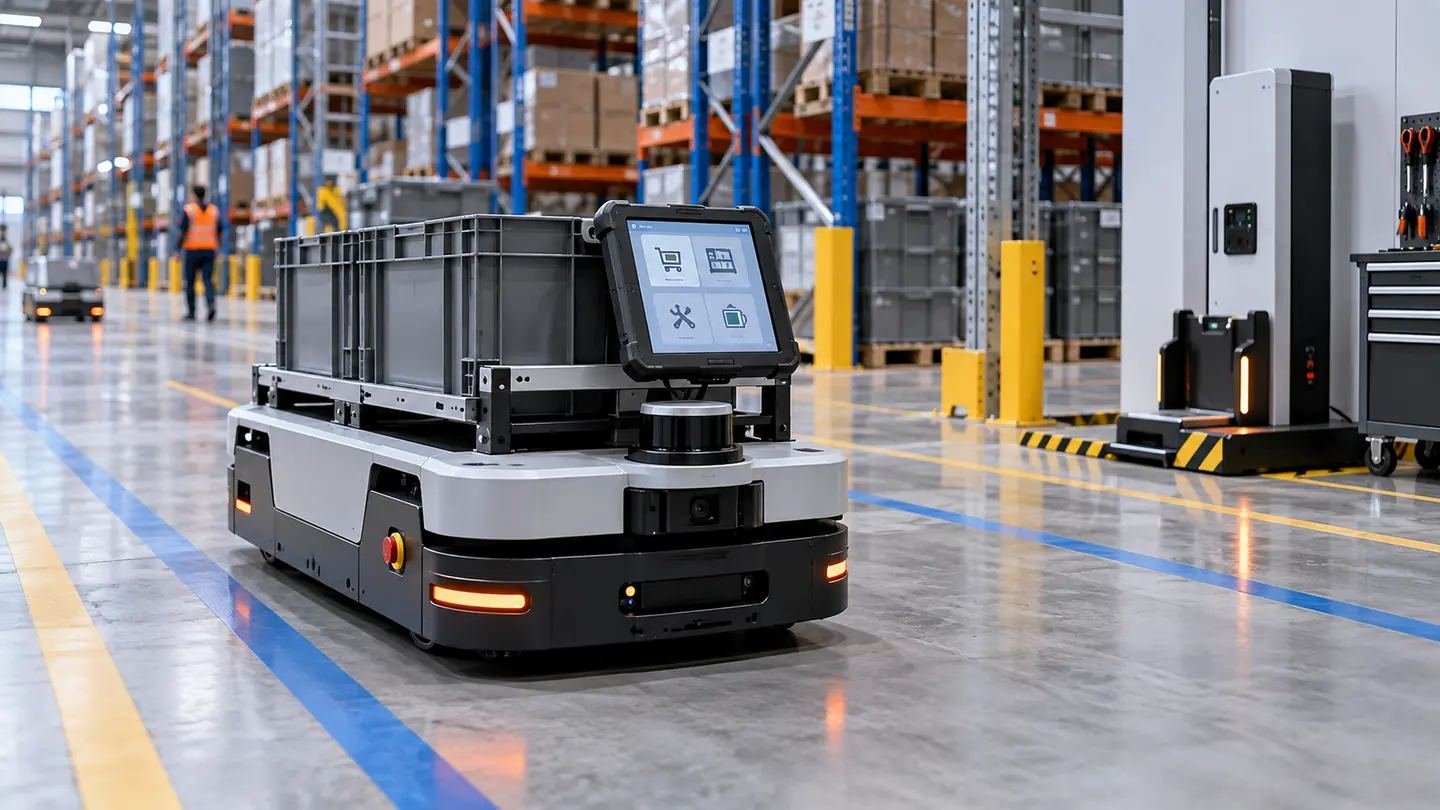
AMRs and AGVs use local interfaces during commissioning, task selection, charging, manual movement, alarm recovery and maintenance. The display can be installed on the robot body, charging station or dispatch console.
Recommended configuration
- 8- to 10.1-inch projected-capacitive touchscreen
- Energy-efficient Intel N-series or Core i3 class processor
- 8 GB RAM and 128 GB SSD
- Linux or Windows IoT
- Dual LAN, Wi-Fi, Bluetooth, optional CAN and RS485
- Compact external-mount or wall-mounted design
Priorities: vibration resistance, vehicle power compatibility, secure connectors and dependable wireless communication.
3. Quadruped and outdoor inspection robots
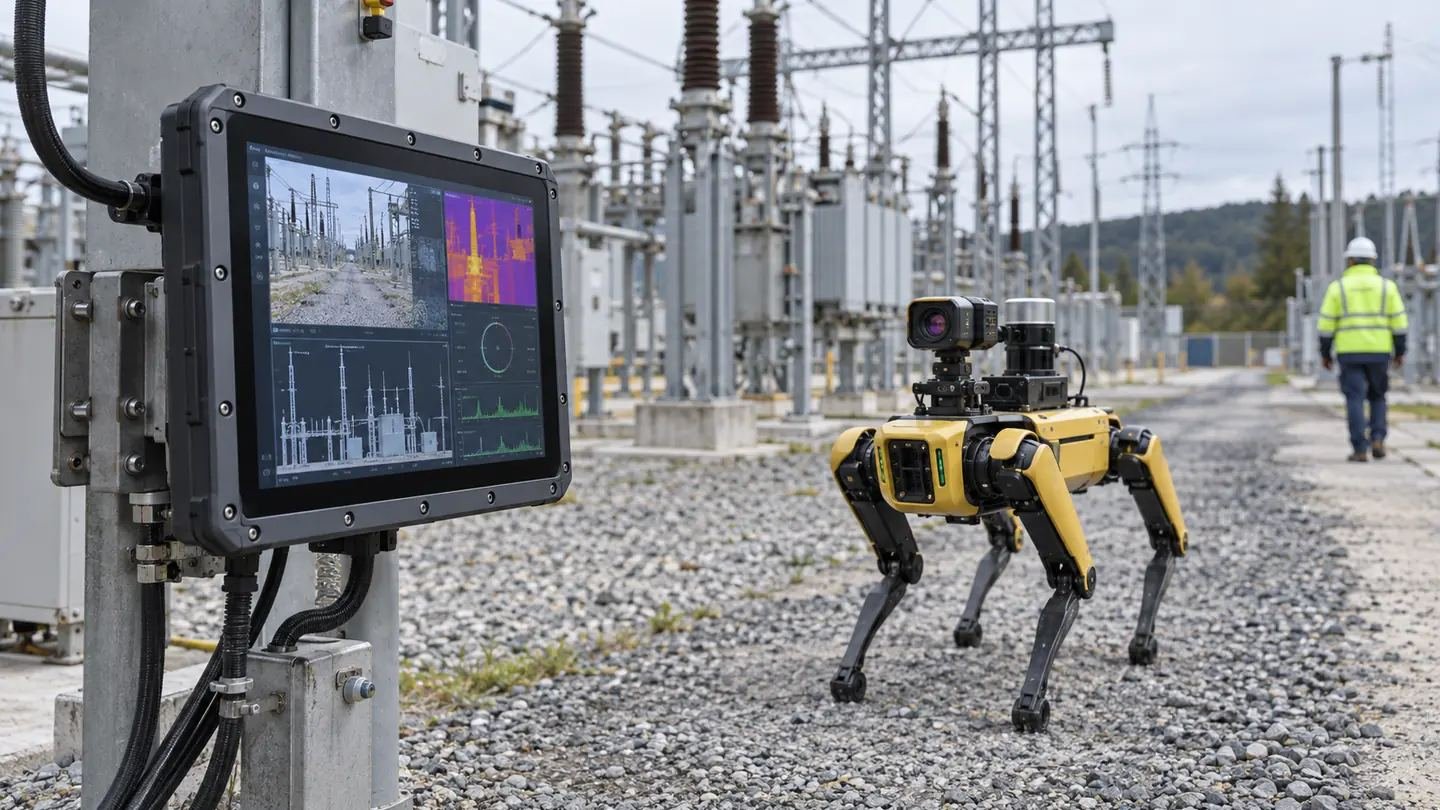
Quadruped robots can carry cameras, thermal imagers, gas sensors and acoustic sensors through utilities, tunnels and hazardous facilities. The touchscreen may be installed on a docking station or portable control terminal instead of directly on the moving robot.
Recommended configuration
- 10.1- to 15.6-inch high-brightness touchscreen
- Intel Core i5 class processor
- 16 GB RAM and 256–512 GB SSD
- Windows or Linux
- Dual LAN, multiple USB ports, Wi-Fi and optional 4G/5G
- VESA or wall mounting with appropriate connector protection
Priorities: display visibility, temperature range, video connectivity and storage capacity.
4. Collaborative robots and industrial robot cells
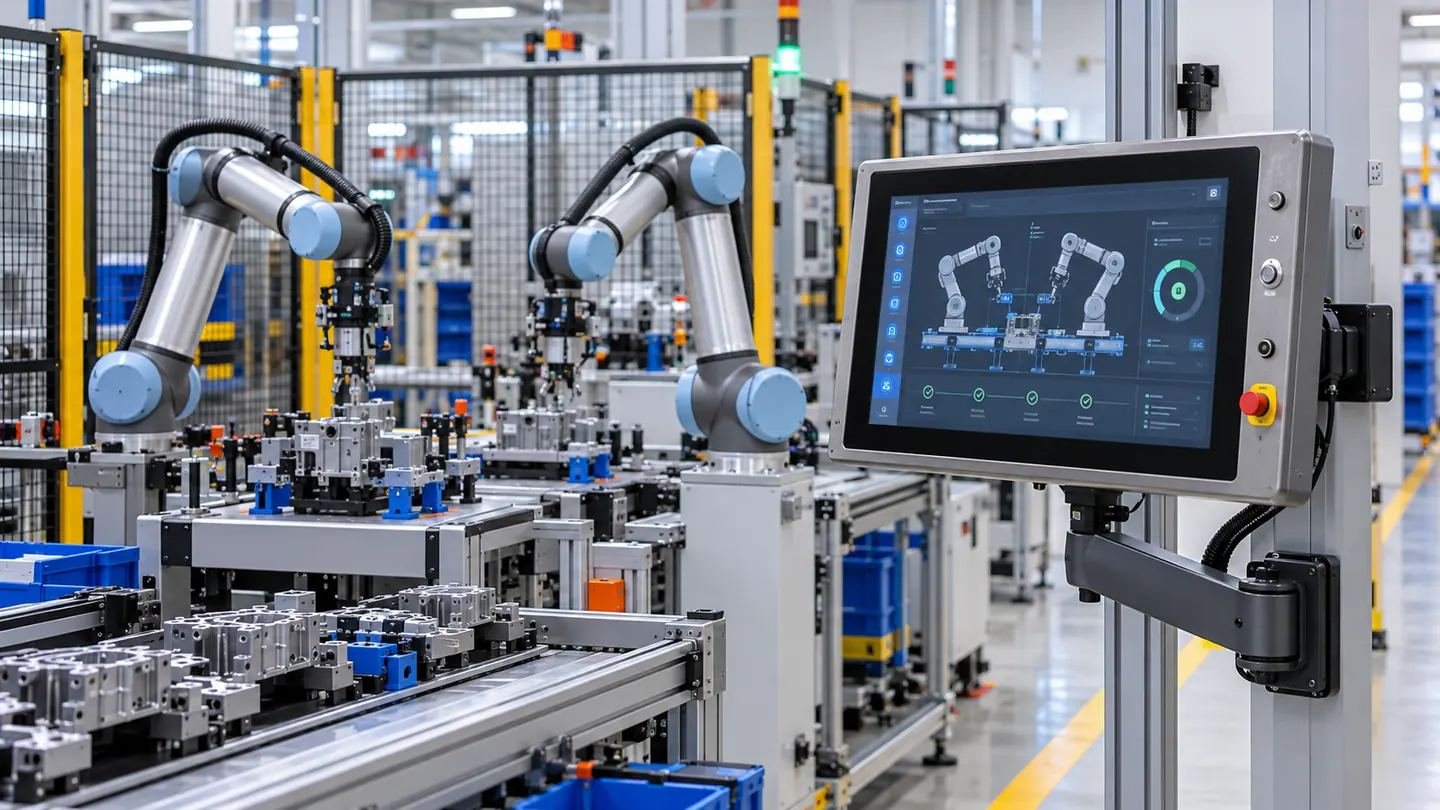
A panel PC beside a robot cell can display recipes, production status, alarms, camera images and maintenance information. A larger display is valuable when several data sources must be viewed together.
Recommended configuration
- 15- to 21.5-inch Full HD touchscreen
- Intel Core i5/i7 class processor
- 16 GB RAM and 256–512 GB SSD
- Windows
- Dual LAN, RS232/RS485, multiple USB ports and optional digital I/O
- VESA wall-mounted or embedded design
Priorities: clear visualization, continuous operation, cable management and service access. Emergency stops and safety functions must remain in an appropriate safety-rated system.
5. Service, medical and hospitality robots
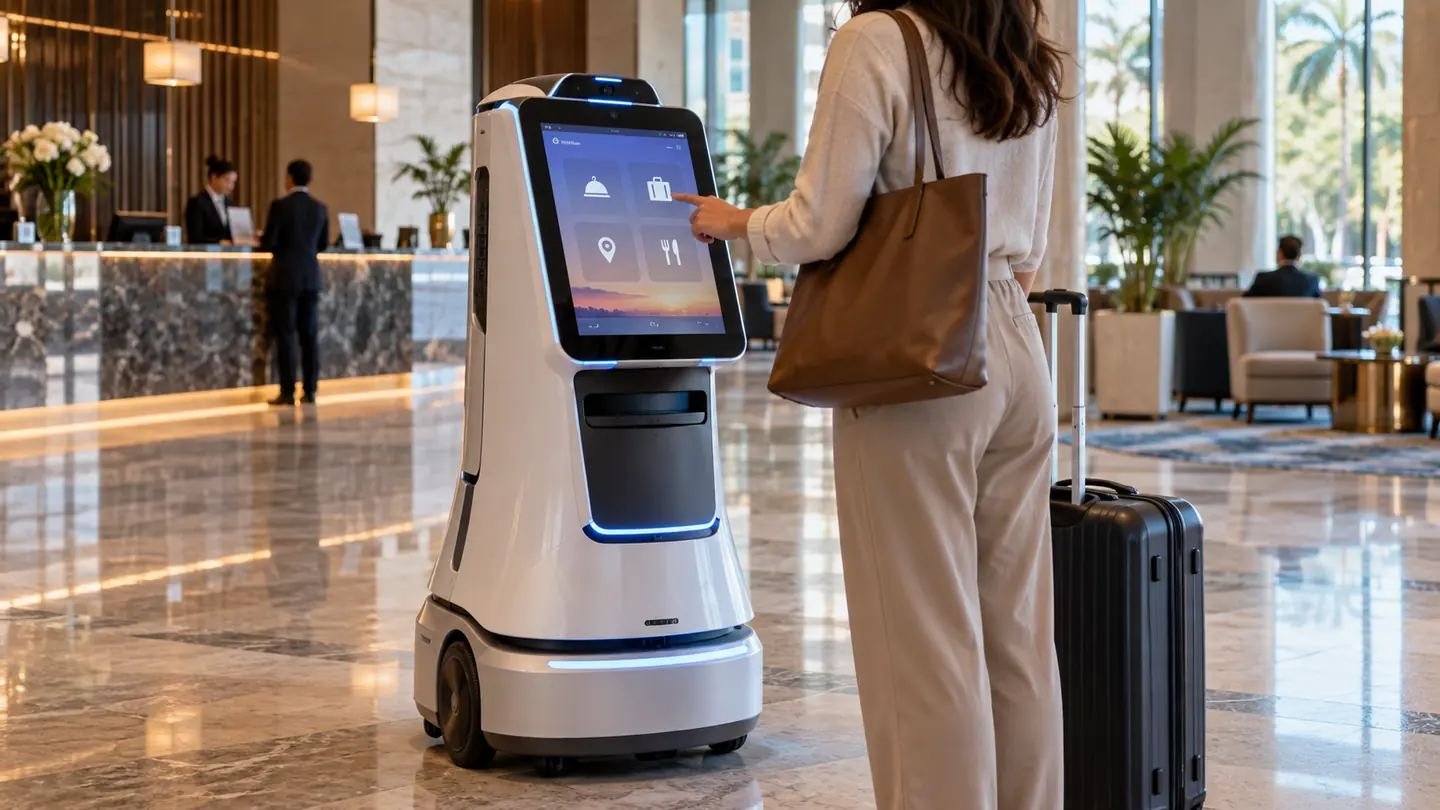
Public-facing robots can use the same display for operator access and customer communication. Typical requirements include audio, cameras, wireless connectivity, touch interaction and remote content management.
Recommended configuration
- 13.3- to 21.5-inch Full HD projected-capacitive touchscreen
- Intel Core i3/i5 or suitable ARM platform
- 8–16 GB RAM and 128–256 GB storage
- Windows, Linux or Android
- Wi-Fi, Bluetooth, LAN, USB, camera and audio interfaces
- Embedded or customized external-mount installation
Priorities: appearance, quiet fanless operation, touch experience, kiosk mode and remote management.
6. Smart-home and building control panels
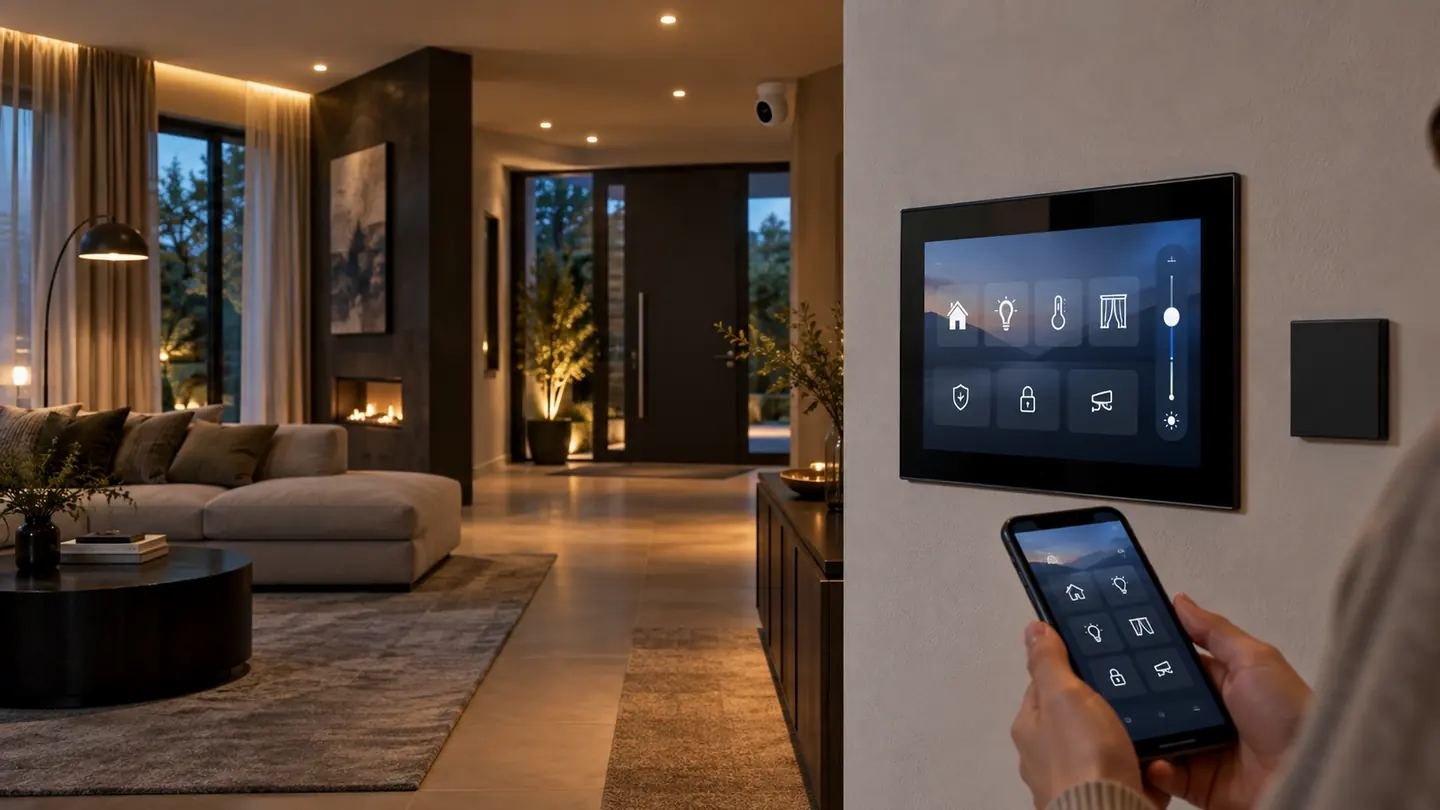
Embodied intelligence is not limited to moving robots. An intelligent building can sense its environment and control lighting, curtains, climate, security, intercom, energy and connected appliances.
Recommended configuration
- 10.1- to 15.6-inch projected-capacitive touchscreen
- Low-power Intel N-series or ARM platform
- 4–8 GB RAM and 64–128 GB storage
- Android, Linux or Windows
- Wi-Fi, Bluetooth, LAN, RS485 and optional relay or GPIO
- Embedded wall installation
An industrial panel PC can participate in a system controlled by a mobile application, but the App function is not created by the hardware alone. It requires compatible software, a local or cloud platform, communication protocols, authentication and secure network configuration.
7. Future embodied-AI prototypes
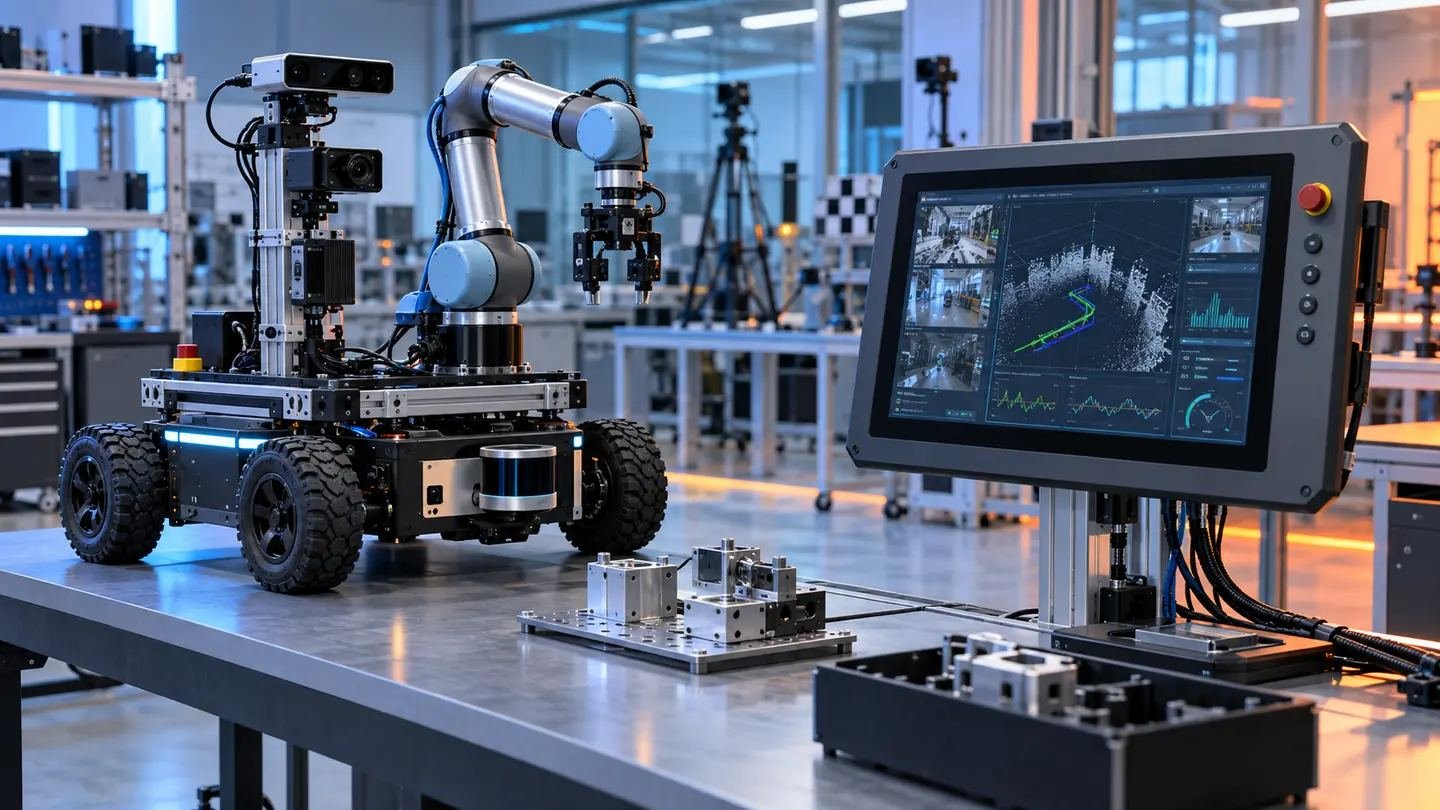
Future systems may include agricultural robots, construction machines, elder-care assistants and coordinated robot fleets. During prototype development, interface flexibility and expansion are often more important than minimum cost.
Recommended configuration
- 13.3- to 15.6-inch Full HD touchscreen
- Intel Core i5/i7 class processor
- 16–32 GB RAM and 512 GB SSD
- Linux or Windows
- Dual LAN, Wi-Fi, Bluetooth, multiple USB ports and configurable serial or CAN interfaces
- Optional connection to a separate GPU or NPU edge-computing module
After the AI workload, interfaces and thermal behavior are validated, the platform can be optimized for weight, power consumption and production volume.
Configuration summary
| Application | Suggested screen | Suggested platform | Main priorities |
|---|---|---|---|
| Humanoid robot | 10.1–13.3 inch | Intel N-series or Core i3/i5 | Low weight, low power, wireless connectivity |
| AMR or AGV | 8–10.1 inch | Intel N-series or Core i3 | Vibration, vehicle power, secure connectors |
| Quadruped inspection robot | 10.1–15.6 inch | Core i5, 16 GB RAM | Brightness, video, temperature range |
| Collaborative robot cell | 15–21.5 inch | Core i5/i7, 16 GB RAM | Large display, industrial I/O, continuous operation |
| Service robot | 13.3–21.5 inch | Core i3/i5 or ARM | Appearance, audio/video, remote management |
| Smart-home control | 10.1–15.6 inch | Low-power Intel or ARM | Silent operation, wall mounting, App integration |
| Embodied-AI prototype | 13.3–15.6 inch | Core i5/i7, 16–32 GB RAM | Expansion and software flexibility |
Information required before selection
- Robot type and application
- Installation location and available space
- Screen size, resolution and touch requirements
- Embedded, external-mount or VESA installation
- Operating system and software
- CPU, memory and storage workload
- Camera, sensor and peripheral connections
- LAN, serial, CAN, USB and wireless interfaces
- Input voltage and power-consumption limit
- Temperature, vibration, dust and water exposure
- Required certification or test standard
- Sample quantity and planned production volume
Building a reliable human–robot interface
The value of an embodied-AI system does not depend only on its AI model, sensors or mechanical design. People must be able to understand, supervise and maintain it. A properly configured industrial touch panel PC creates a practical interface between physical intelligence and human decision-making.
ZhengFeng provides external-mount, embedded and wall-mounted industrial panel PCs in multiple screen sizes. Processor, memory, storage, operating system and interfaces can be configured according to the application.
Planning an embodied-AI or robotics project?
Send the robot structure, installation drawing, screen size, operating system, required interfaces, environment, quantity and destination.
Request a ConfigurationView Customization Support